Harly Font: A Detailed Evaluation for Designers and Creatives
In the crowded landscape of display typefaces, finding a font that balances artistic flair with practical application can be a challenge. Harly positions itself as a decorative display option specifically engineered to serve as the focal point of a design. Unlike standard body text fonts, Harly is built to command attention, offering a strong visual personality that breaks away from conventional typographic norms. This article explores the distinct characteristics of Harly, compares it to other design approaches, and evaluates its specific use cases to help you determine if it fits your creative needs.
Understanding the Distinct Character of Harly
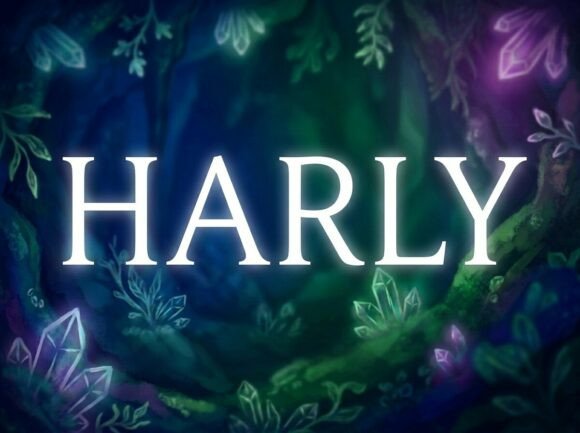
Harly is classified as a decorative display typeface, meaning it is optimized for large sizes and short bursts of text rather than long-form reading. Its design philosophy centers on uniqueness; every letterform is crafted with artistic elements that give it a distinct flair. This is not a font for blending in—it is designed to be the center of attention.
A critical characteristic of Harly is its format. It is an ALL-CAPS typeface. This means it contains only uppercase letters and does not include lowercase glyphs. This design choice is intentional, as it reinforces the font's role in high-impact scenarios. It is specifically engineered for bold headlines, artistic logos, and creative packaging where the goal is to make an immediate impression. For designers, this means Harly is a specialized tool; it excels in its niche but is not intended for body copy or situations requiring varied typographic hierarchy through case.
Practical Applications: When to Choose Harly
Deciding whether to use a font like Harly depends entirely on the project's goals. Its strengths are most apparent in specific contexts where visual impact outweighs the need for subtlety or extensive readability.
Ideal scenarios for Harly include:
- Logo Design: When a brand requires a wordmark that feels unique and memorable, Harly's artistic letterforms can create a distinctive identity.
- Poster and Banner Headlines: For event promotions, album covers, or artistic projects where the headline must grab attention from a distance.
- Product Packaging: Especially in markets like cosmetics, artisanal goods, or luxury items where packaging design is a key differentiator.
- Social Media Graphics: For bold statements, quotes, or promotional posts that need to stand out in a fast-scrolling feed.
In these situations, Harly's lack of lowercase letters is irrelevant, as the design typically uses a single, powerful typographic statement. The font's professional finish ensures that even at its most decorative, it maintains a polished look suitable for commercial applications.
Comparing Harly to Other Typographic Approaches
When evaluating Harly, it's useful to consider it against broader categories of typefaces and alternative methods for achieving visual impact.
Harly vs. Classic Serif or Sans-Serif Display Fonts:
Many traditional display fonts, like Didot or Futura Display, offer impact through scale, weight, and classic proportions. They are versatile, often including full character sets with lowercase letters. Harly differs by prioritizing artistic uniqueness over classical versatility. If your project requires a timeless, scalable headline, a classic display font might be more appropriate. If it demands a one-of-a-kind, contemporary artistic statement, Harly presents a stronger case.
Harly vs. Script or Handwritten Fonts:
Script fonts also offer personality and flair, often mimicking handwriting or calligraphy. They can convey elegance, whimsy, or a personal touch. Harly's all-caps, structured design tends to feel more assertive and graphic than the flowing nature of most scripts. The choice here comes down to the desired emotional tone: the structured boldness of Harly versus the fluid expressiveness of a script.
Harly vs. Custom Lettering or Illustration:
For ultimate uniqueness, some projects commission custom lettering. Harly offers a middle ground—it provides a highly distinctive, pre-designed aesthetic that can save significant time and budget compared to a fully bespoke creation. However, it will never be as unique as a one-off illustration. The trade-off is between cost/time efficiency and absolute originality.
Evaluating Strengths and Tradeoffs
Like any design tool, Harly comes with inherent strengths and limitations that should inform your decision.
Strengths:
- Immediate Visual Impact: Its core purpose is to stand out, and it delivers on that promise effectively.
- Professional Polish: The font maintains a high-quality finish, avoiding the "gimmicky" feel that some decorative fonts can have.
- Versatility Within Its Niche: It works across logos, headlines, and packaging, making it a valuable asset for specific design libraries.
- File Compatibility: Provided in both OTF and TTF formats, it ensures broad compatibility with design software and systems.
Tradeoffs and Limitations:
- All-Caps Only: This is the most significant limitation. It cannot be used for any text requiring lowercase letters, ruling out body copy, detailed informational graphics, or designs needing typographic variety through case.
- Specialized Use Case: It is not a "workhorse" font. Its strong personality can overwhelm a design if used inappropriately or in large quantities.
- Readability at Small Sizes: Decorative fonts, especially all-caps ones, can become difficult to read when scaled down significantly. Harly is designed for display sizes.
Making an Informed Decision: Is Harly Right for You?
Choosing Harly should be a deliberate decision based on project requirements. Ask yourself these questions:
What is the primary function of the text? If it's a short, high-impact headline, logo, or decorative initial, Harly is a strong candidate. If it's for readable paragraphs, navigation, or detailed information, you need a different font.
What is the desired brand or design personality? Harly conveys a sense of artistic boldness and modern flair. It aligns well with creative, fashion-forward, or avant-garde aesthetics. For projects requiring a conservative, corporate, or highly minimalist tone, other typeface categories would be more suitable.
What is the context of use? Consider the medium. Harly shines in digital and print displays where it can be rendered at a size that showcases its details. In contexts requiring extreme scalability or where the design might be reproduced at very small sizes (like a favicon or fine print), its effectiveness diminishes.
In summary, Harly