Evaluating the Boboy Font: A Practical Guide for Modern Designers
In the vast typography landscape, selecting the right typeface often involves balancing legibility against personality. When you encounter the Boboy font, you are immediately introduced to a specific category of design: the cheerful, organic display typeface. Unlike the rigid structures of geometric sans-serifs or the sharp precision of modern grotesques, Boboy offers a visual language defined by plush curves and softened edges. For designers and brand strategists exploring their options, understanding where Boboy fits—and where it falls short—is essential for making an informed decision.
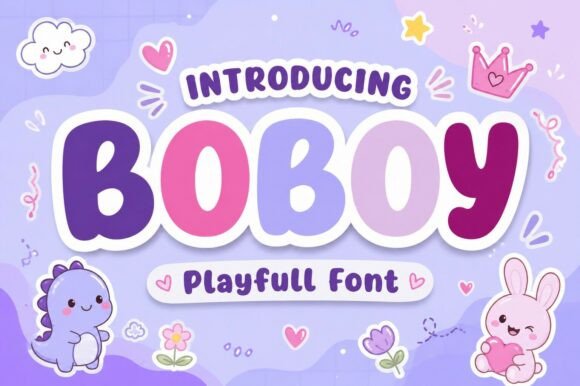
At its core, Boboy is characterized by its "bubbly" aesthetic. The characters are intentionally chunky and slightly wider than standard proportions, creating a robust yet jovial presence. The stroke weight remains relatively uniform, which aids in maintaining a sense of stability even within its playful design. However, what truly differentiates this typeface is its rejection of strict geometric patterns. Instead of perfect circles and straight lines, Boboy dances to a more emotive, dynamic rhythm. The edges are dulled, exuding a tranquil sensation that feels approachable rather than sterile. It is, effectively, a child's laughter frozen into a font format.
Analyzing the Design Language: Strengths and Visual Impact
When evaluating Boboy, it is helpful to look at its specific design attributes to understand its strengths. The "rounded" nature of the characters is not merely decorative; it serves a functional purpose in softening the tone of a message. In user experience (UX) design, rounded shapes are often subconsciously associated with safety and friendliness. Therefore, Boboy excels in environments where the goal is to lower barriers and invite engagement.
- Visual Weight: Because the characters are chunky, Boboy has a high visual weight. This makes it excellent for headlines or poster titles where you need to grab attention quickly without using aggressive, sharp typography.
- Stroke Uniformity: The consistent stroke width ensures that the font remains legible even at smaller display sizes, though it is primarily designed for larger text.
- Organic Vibe: The slight irregularities or "effervescence" in the curves prevent the text from looking robotic. This is a key differentiator if you are comparing it to standard rounded sans-serifs, which can sometimes feel clinical.
Tradeoffs and Limitations: When to Choose Another Option
While Boboy is a distinct tool, it is not a universal solution. Every design choice involves tradeoffs, and understanding the limitations of Boboy is just as important as appreciating its aesthetic. The primary tradeoff here is between personality and versatility.
Legibility in Long-form Text: Boboy is strictly a display typeface. Its wide, bubbly characters and playful rhythm make it unsuitable for body copy or long paragraphs. If you attempt to use Boboy for reading text, you will likely induce eye strain for the user. In scenarios requiring extensive reading—such as blog posts, whitepapers, or detailed product descriptions—you would need to pair Boboy with a clean, neutral sans-serif or serif for the body text.
Professional Gravity: The "joyful" nature of the font can undermine the perceived seriousness of a topic. For industries dealing with finance, law, or heavy machinery, Boboy’s whimsical nature might be perceived as lacking professional gravity. In these contexts, a more neutral geometric sans-serif is usually the safer, more effective choice.
Comparative Analysis: Boboy vs. Alternative Styles
To make a well-rounded decision, it is useful to compare Boboy against other common typographic approaches. This isn't about finding a "better" font, but rather understanding which style aligns with your specific project goals.
Boboy vs. Standard Geometric Sans-Serifs
Standard geometric sans-serifs (often used in tech and corporate branding) prioritize neutrality and scalability. They are designed to get out of the way and let the content speak. Boboy, conversely, is the content's personality. If you are designing for a corporate SaaS dashboard, a geometric font is superior. However, if you are designing a splash screen for a mobile game or a flyer for a community event, Boboy provides an instant emotional connection that a standard sans-serif cannot match.
Boboy vs. Classic Serifs
Classic serifs convey tradition, authority, and elegance. They are the typographic equivalent of a tailored suit. Boboy is the equivalent of a comfortable, colorful hoodie. The comparison highlights the gap in tone: one commands respect through history, while the other commands attention through approachability. For family-friendly branding or educational materials for children, Boboy is the stronger contender.
Boboy vs. Handwritten Scripts
When designers look for "warmth," they often consider handwritten scripts. While scripts offer a personal touch, they often suffer from legibility issues, especially for those with visual impairments or dyslexia. Boboy offers a middle ground. It retains the warmth and organic feel of handwriting but structures it within a clear, legible framework. It is often the better choice for packaging where clarity (like reading a product name on a shelf) is paramount.
Best-Fit Scenarios and Practical Applications
Based on its design characteristics, Boboy is the ideal choice in specific scenarios where "quirky" and "friendly" are the primary design goals. If your creative brief involves evoking nostalgia, cuteness, or high energy, this font should be on your shortlist.
- Packaging Design: This is perhaps Boboy's strongest use case. For candies, snacks, beverages, or children’s toys, the bubbly characters mimic the product's texture. It suggests that the product inside is fun and safe to consume.
- Event Branding: Birthday invitations, carnival posters, or school fair signage benefit from the font's jovial nature. It sets a festive mood immediately.
- Digital Media Headers: For lifestyle blogs, YouTube thumbnails, or social media graphics targeting a casual audience, Boboy can help content stand out in a crowded feed.
Decision Factors for the Modern Designer
As you evaluate whether to integrate Boboy into your toolkit, consider the following decision factors:
- Audience Age and Context: Is your audience children, parents, or young adults seeking playful content? Boboy fits perfectly. Is your audience corporate executives? Look elsewhere.
- Pairing Potential: Are you prepared to pair it with a secondary font? Boboy works best when it has a quiet partner for the heavy lifting of information delivery.
- Brand Voice: Does the brand voice rely on being "effervescent" and "natural"? If the brand is serious, authoritative, or minimalist, Boboy will create a dissonance with the message.
Ultimately, Boboy is not just a set of glyphs; it is a personality. It adds an element of nostalgia and joy to creative endeavors, but it demands a specific context to shine. By weighing these tradeoffs—personality versus neutrality, whimsy versus professionalism—you can determine if Boboy is the right resource for your next project.