Twirly Twinkle: Evaluating a Playful Handwritten Script Font for Your Creative Projects
Understanding the Aesthetic and Design of Twirly Twinkle
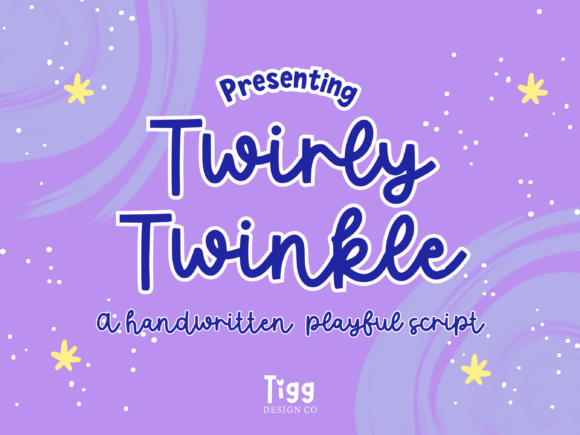
When evaluating typefaces for creative work, the visual personality of a font is a primary consideration. Twirly Twinkle is classified as a playful handwritten script font, designed to evoke a soft, dreamy, and whimsical atmosphere. Its core characteristics include a bouncy baseline, where letters appear to dance rather than sit on a rigid line, and a flowing, connected style that mimics natural handwriting. This design typically features rounded edges, gentle curves, and a light-hearted weight, avoiding sharp, aggressive angles. The overall effect is intended to be friendly, approachable, and youthful, making it a candidate for projects that require a personal, handcrafted touch.
Primary Use Cases and Target Applications
The utility of a font like Twirly Twinkle is often defined by its intended applications. Its aesthetic profile makes it a strong candidate for a specific range of design contexts where a formal, corporate, or minimalist feel is not the goal.
- Branding and Packaging: For small businesses, especially those in the handmade, artisanal, or children's product space, this font can help establish a brand identity that feels authentic and personal. It works well on product labels, hang tags, and packaging for items like bath bombs, candles, or baked goods.
- Stationery and Invitations: The dreamy quality is well-suited for event stationery. This includes baby shower invitations, first birthday party designs, wedding save-the-dates for casual ceremonies, and greeting cards. Its bouncy nature adds a celebratory energy.
- Home Decor and Nursery Art: For nursery prints, wall art quotes, and personalized name plaques, Twirly Twinkle can contribute to a soft, comforting, and playful environment. Its legibility at larger sizes is a key advantage here.
- Digital and Social Media Graphics: The font can add personality to Instagram stories, Pinterest pins, and Canva-based social media templates. It is often used for quotes, call-to-action text, or headings in digital content aimed at a lifestyle or parenting audience.
- DIY and Craft Projects: It is a popular choice for use with cutting machines like Cricut or Silhouette for creating custom stickers, decals, and vinyl projects. The connected script style must be evaluated for weedability—the ease of removing excess material around the letters.
Key Benefits and Potential Advantages
Choosing a font involves weighing its strengths against project requirements. The primary benefits of a typeface like Twirly Twinkle are rooted in its emotional and aesthetic appeal.
First, it imparts a distinct mood. The soft, dreamy feel can instantly communicate warmth, innocence, and joy, which is difficult to achieve with standard sans-serif or serif fonts. This emotional resonance is valuable for connecting with an audience on a personal level. Second, its playful bounciness injects energy into a layout, preventing designs from feeling static or overly serious. This dynamic quality can make text more engaging, particularly for younger audiences or in casual contexts. Finally, as a script font, it simulates authentic handwriting, lending a layer of authenticity and human touch that can build trust and relatability for a brand or personal project.
Practical Considerations and Potential Tradeoffs
However, an objective evaluation requires acknowledging the limitations and tradeoffs inherent in any decorative script font. Twirly Twinkle is not a universal solution.
The most significant consideration is legibility, especially at small sizes or in long blocks of text. The flowing, connected letters and decorative swirls can become difficult to read when used for body copy, fine print, or on screens with low resolution. It is generally best reserved for headlines, short phrases, or logos where impact outweighs the need for quick readability. Another critical factor is contextual appropriateness. Its playful, whimsical style is unsuitable for formal, professional, or serious applications. Using it for a law firm's website, a financial report, or an academic paper would undermine credibility. Furthermore, designers must consider font pairing. Twirly Twinkle requires a complementary companion font—typically a clean, simple sans-serif or a quiet serif—for any supporting text to ensure overall design clarity and balance.
When to Choose Twirly Twinkle: A Decision Framework
Determining if this font aligns with your goals involves asking specific questions about your project's audience, message, and medium.
Consider Twirly Twinkle if:
- Your target audience is children, parents, or a demographic that appreciates handmade, boutique, or whimsical aesthetics.
- The primary goal of your design is to evoke feelings of joy, warmth, nostalgia, or playfulness.
- The text usage will be limited to short headlines, titles, logos, or decorative elements, not paragraphs.
- The final product is a physical item like a mug, sticker, or print where the font can be displayed at a sufficient size.
- You are creating digital content for platforms like Canva where a quick, personality-driven header is needed.
In these scenarios, Twirly Twinkle can be an effective tool for achieving a specific, desired emotional response and visual identity.
Exploring Alternatives: When Other Fonts May Be More Suitable
It is equally important to recognize situations where alternative typefaces would be a better fit. If your project has different priorities, exploring other options is a necessary step.
If maximum legibility is paramount—for example, for website body text, user interface elements, or instructional manuals—a clean, geometric sans-serif font like Open Sans, Lato, or Montserrat would be superior. For projects requiring a formal, traditional, or authoritative tone, a classic serif font like Garamond, Times New Roman, or a modern serif like Playfair Display would be more appropriate. If you desire a handwritten feel but with a more mature, sophisticated, or minimalist aesthetic, consider a font with less bounce and fewer decorative swashes, such as a clean monoline script. For extremely large-scale applications like billboards or for very small-scale uses like footnotes, a highly legible, purpose-built display or micro font is essential.
Conclusion: Making an Informed Selection
Selecting a typeface is a strategic design decision that directly influences how a message is perceived. Twirly Twinkle occupies a specific niche: it is a tool for injecting playful energy and dreamy charm into creative projects aimed at evoking warmth and joy. Its strengths are clear in applications like children's branding, whimsical invitations, and decorative prints. However, its limitations in legibility and contextual formality make it ill-suited for general-purpose or professional text. By carefully evaluating your project's audience, emotional intent, and practical requirements against the font's characteristics and tradeoffs, you can make an informed decision on whether Twirly Twinkle is the right choice to bring your vision to life.