Mastering Slicker Efirates: How to Use This Bold Handwritten Font Without Common Pitfalls
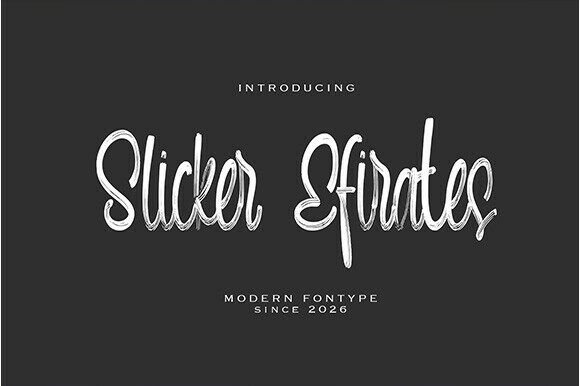
The digital design world often craves that elusive human touch, a sense of authenticity that stands out against the sea of sterile, geometric sans-serifs. Enter Slicker Efirates, a modern handwritten typeface that captures the raw, expressive energy of a brush marker. It isn’t just another script font; it is a tool designed for bold statements, featuring rough ink details, tall letterforms, and energetic curves. Whether you are crafting a logo for a streetwear brand, designing a high-impact poster, or curating a stylish Instagram feed, Slicker Efirates offers a unique balance between contemporary elegance and gritty, artistic rawness.
However, the very qualities that make this font visually striking are also what make it challenging to use effectively. Many designers, from beginners to seasoned professionals, fall into common traps when working with expressive typography like Slicker Efirates. They either let the font overpower the message, choose the wrong context for its style, or ignore technical details that affect usability. If you want to harness the full potential of this typeface without making your designs look cluttered or amateurish, it is essential to understand how to navigate these specific hurdles.
The Allure of Brush Textures and Why Context Matters
At its core, Slicker Efirates is designed to mimic the natural movement of a hand moving quickly across a surface. This "marker-style" aesthetic brings a level of warmth and personality that digital precision often lacks. It is particularly popular in lifestyle branding, fashion editorials, and album art because it communicates emotion and immediacy. When a viewer sees this font, they subconsciously register it as personal and handmade.
The first mistake many users make is assuming that "expressive" means "universal." Just because a font looks cool in a preview doesn't mean it fits every project. For instance, using Slicker Efirates for body text in a long-form blog post would be a disaster. The rough ink details and complex curves that look beautiful at 72pt become visual noise at 11pt, causing eye strain and destroying readability. It is crucial to recognize that this is a display typeface. Its job is to catch the eye in headlines, logos, and short bursts of text, not to carry the weight of a paragraph.
Avoiding the "Cluttered Canvas" Syndrome
A frequent oversight when using bold, textured fonts like Slicker Efirates is the failure to manage visual hierarchy. Because the font has high personality, it demands space to breathe. A common error is pairing it with other decorative fonts or placing it over a busy, high-contrast background. This creates a "cluttered canvas" where the text fights with the imagery, and the message gets lost in the noise.
Imagine a social media graphic for a coffee shop. The designer uses Slicker Efirates for the headline "Fresh Brew Daily" but places it over a close-up photo of coffee beans with high contrast shadows. The rough edges of the font merge with the texture of the beans, making the text illegible. A better approach is to use the font against a solid color or a blurred background. Furthermore, pairing is key. Slicker Efirates works best when balanced with a clean, minimalist sans-serif for supporting text. This contrast allows the handwritten font to shine as the hero element while the secondary text provides clear, readable information.
Technical Oversights: Kerning and Licensing
One of the most overlooked aspects of using modern display fonts is the technical setup, specifically regarding spacing. Handwritten fonts, due to their irregular shapes, often have predefined kerning (space between letters) that looks perfect in the word "Hello" but looks awkward in the word "Vast." The capital letters in Slicker Efirates are tall and expressive, which means they can sometimes collide awkwardly with lowercase letters if not manually adjusted.
If you are designing a logo or a large headline, you cannot simply type the text and call it a day. You must manually adjust the tracking and kerning. For example, if you are writing "SLICKER," the 'S' and 'L' might sit well together, but the 'K' and 'E' might need tightening to maintain that cohesive, hand-crafted flow. Ignoring this makes the design look like it was typed out in five seconds rather than crafted with intention.
The Hidden Cost of "Free" Downloads
Another critical area where people make poor decisions involves licensing. In the search for high-quality assets, many creators stumble upon "free download" sites offering premium fonts like Slicker Efirates. Downloading a font from an unauthorized source is not just a legal risk; it is often a technical headache. These files are frequently corrupted, missing glyphs, or stripped of OpenType features that allow for stylistic alternates. Even worse, using unlicensed fonts for commercial work—for a client's logo or merchandise—can lead to severe copyright infringement lawsuits later on.
Always verify the source. If you are using Slicker Efirates for a commercial project, ensure you have a license that covers that specific usage. A desktop license might cover a printed poster, but you may need a web license if you want to use it on a website. Checking these details upfront saves you from having to rebrand a client’s identity six months down the line because of a licensing violation.
Practical Application: From Packaging to Social Media
Understanding where Slicker Efirates excels will help you avoid misapplication. The font is described as having "tall letterforms" and "energetic curves," making it ideal for vertical layouts or stacked text arrangements. A great way to use this font effectively is in packaging design, particularly for products that want to convey an artisanal or edgy vibe—think hot sauce bottles, craft beer labels, or boutique cosmetic branding.
However, when applying it to packaging, consider the physical limitations of print. Very fine brush strokes can sometimes disappear or bleed on certain textured papers or packaging materials. It is always wise to do a test print. If the ink details get lost, you might need to increase the font size or slightly thicken the stroke digitally to ensure the "rough ink details" remain visible and contribute to the design rather than vanishing.
Evaluating the Font for Your Brand Identity
Before committing to Slicker Efirates for a full brand identity, ask yourself if the "energy" matches the brand's voice. This font has a youthful, dynamic, and slightly rebellious character. It works beautifully for a modern lifestyle blog, a music festival, or a fashion line. It might not be the best choice for a conservative law firm or a corporate banking app.
A helpful exercise is to type out your brand name and a few taglines. Does the font feel forced? Does the natural flow of the letters support the meaning of the words? Sometimes, a font looks great on the alphabet preview but fails to convey the right emotion when spelling out a specific business name. If the font feels too chaotic for your specific needs, it is better to pivot to a cleaner script rather than forcing a style that confuses your audience.
Final Thoughts on Versatility and Choice
Slicker Efirates is a powerful tool in the right hands. Its ability to blend a raw, handcrafted feel with contemporary styling makes it a favorite for designers looking to add personality to their work. By avoiding the pitfalls of poor legibility, technical spacing errors, and mismatched contexts, you can elevate your designs from generic to exceptional.
Remember that good typography is about communication, not just decoration. Use Slicker Efirates to make a statement, but ensure that statement is clear, legally sound, and visually harmonious with the rest of your design elements. When you treat the font with the same care you give your layout and color palette, the results will be authentic, impactful, and professional.