Racole Font: Capturing the Irresistible Charm of a Retro Summer in Your Designs
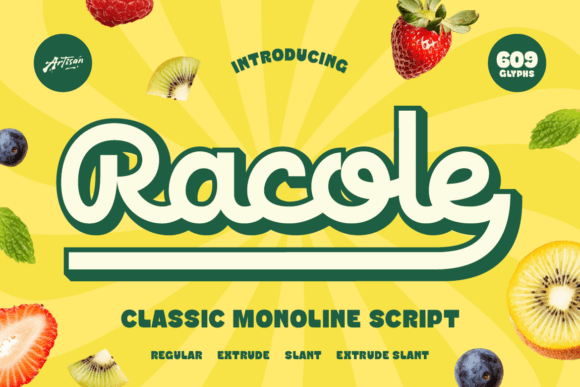
In the vast world of typography, certain fonts do more than just display letters; they evoke a specific feeling, a memory, or a sensory experience. Racole is one such typeface. It is not merely a script font; it is a bold, bubbly classic monoline script that feels like a warm summer day distilled into digital form. Designed to radiate positivity and energy, Racole draws inspiration from the nostalgic aesthetics of retro candy shops, the vibrant colors of fresh fruit markets, and the carefree joy of sunny afternoons. For designers, brand builders, and creative enthusiasts, understanding how to leverage this font can be the key to unlocking designs that are not only visually appealing but emotionally resonant.
Understanding the Aesthetic: What Makes Racole Unique?
To appreciate Racole, one must first understand its design philosophy. The term monoline refers to the consistency of the stroke width. Unlike cursive scripts that feature dramatic thick-to-thin transitions (reminiscent of a pointed pen), Racole maintains a uniform line weight throughout each character. This consistency creates a sense of stability and modernity while retaining the fluid, connected nature of handwriting.
However, Racole is far from rigid. Its defining characteristic is its playful bounce. The baseline of the text is not perfectly straight; instead, the letters dance slightly above and below the line, mimicking the natural, imperfect rhythm of human hand-lettering. This "bounce" injects a sense of movement and lightheartedness into the text, making it feel alive and approachable.
The font’s "thick, confident strokes" ensure that it commands attention. In the world of graphic design, legibility is often a concern with script fonts, particularly at smaller sizes. Racole addresses this by utilizing a bold weight that ensures the letters remain distinct and readable, whether they are viewed on a small mobile screen or a large printed banner. It is this combination of thickness, consistency, and movement that allows Racole to deliver that "instant charm" without sacrificing functionality.
The Versatility of Racole: Four Essential Styles
One of the most practical aspects of the Racole font family is its versatility, anchored by a comprehensive pack of four distinct styles. This variety allows designers to create depth, hierarchy, and visual interest without needing to pair Racole with other typefaces that might clash with its personality.
- Racole Regular: This is the foundation of the family. It features the classic monoline script look with the characteristic bounce. It is perfect for body text on invitations, sub-headings, or anywhere a friendly, readable script is needed.
- Racole Extrude: This style adds a third dimension to the font. It includes a shadow or depth effect that makes the letters appear to pop off the page. This is excellent for headlines where you want to create a retro, 3D effect reminiscent of vintage signage or classic arcade lettering.
- Racole Slant: While the Regular style stands relatively upright, the Slant version introduces a dynamic forward lean. This adds a sense of speed and urgency, making it ideal for conveying action or excitement, such as on a "Sale" tag or a fast-food menu item.
- Racole Extrude Slant: Combining the best of both worlds, this style offers the forward momentum of the slant with the dimensional depth of the extrude. It is the most dramatic option, perfect for grabbing immediate attention in a crowded visual space.
By mixing and layering these styles, designers can create sophisticated typographic compositions. For example, a logo might use the Extrude Slant for the brand name to make it pop, while using the Regular style for a tagline to keep it grounded and readable.
Practical Applications: Where Racole Shines
The true value of a font lies in its application. Racole is specifically engineered for industries and projects where warmth, nostalgia, and friendliness are paramount. Its aesthetic aligns perfectly with "feel-good" markets.
Food, Beverage, and Culinary Branding
There is a psychological link between typography and taste. Rounded, soft shapes are often associated with sweetness and comfort, while sharp angles can be associated with bitterness or intensity. Racole’s rounded, bubbly structure makes it a natural fit for the culinary world.
- Juice Labels and Smoothie Bars: The font’s energy mimics the freshness of fruit. Imagine a bottle of lemonade with "Fresh Squeezed" written in Racole Regular; the font visually communicates the organic, homemade quality of the product.
- Bakeries and Cafes: For a neighborhood bakery, Racole can be used to design a logo that feels like a warm hug. It suggests that the establishment is welcoming and unpretentious.
- Candy and Snack Packaging: This is perhaps the font's strongest suit. The "retro candy shop" inspiration shines here. Racole Extrude is particularly effective for snack wrappers, mimicking the bold, eye-catching typography often found on vintage candy bars.
Event Invitations and Stationery
Beyond commercial branding, Racole excels in personal and event stationery. Its legibility and charm make it ideal for:
- Gift and Greeting Cards: Whether it is a birthday card or a holiday greeting, Racole adds a hand-crafted feel that digital text often lacks. It bridges the gap between digital precision and analog warmth.
- Party Invitations: For summer parties, baby showers, or casual weddings, the font sets a joyful tone immediately upon the guest opening the envelope.
Digital Presence and Social Media
In the fast-paced world of social media, grabbing attention in the first second is crucial. Racole is designed to "pop on screen." Its bold strokes ensure readability even on small smartphone displays. It is highly effective for:
- Instagram Graphics: Quote cards, sale announcements, and story highlights benefit from the font's high energy.
- Website Headers: For lifestyle blogs or e-commerce sites selling organic or artisanal products, Racole can serve as a primary display font to establish a friendly brand voice immediately.
Design Tips: Using Racole Effectively
While Racole is a powerful tool, using display fonts requires a bit of strategy to maintain a professional look. Here are some guidelines for integrating Racole into your designs effectively.
Pairing with Neutral Fonts
Because Racole is so bold and personality-driven, it can be overwhelming if used for long paragraphs of text. It works best as a display or headline font. To create a balanced design, pair Racole with a clean, neutral sans-serif or serif font for the body copy. Fonts like Open Sans, Lato, or a simple geometric sans-serif provide a quiet background that allows Racole’s headlines to shine without competing for attention.
Leveraging Color Psychology
Racole pairs exceptionally well with bright, saturated colors. Think pastel pinks, vibrant teals, sunny yellows, and rich berry reds. These colors enhance the "summer day" vibe of the font. However, it also works beautifully in monochrome (black and white) for a more sophisticated, retro-contrasted look.
Utilizing OpenType Features
For advanced users, Racole often includes OpenType features such as alternates and ligatures. Alternates are different versions of the same letter (e.g., a different style of lowercase 'g' or 't'). Using these features can prevent repetitive patterns in your text, making the design look more like authentic hand-lettering rather than a repetitive digital font. Ligatures connect specific letter pairs (like "st" or "fl") in a more fluid, natural way.
Why Racole Matters in Modern Design
In an era dominated by minimalist, geometric sans-serifs (like Helvetica or Roboto), there is a growing counter-trend toward humanism and nostalgia. Consumers are increasingly drawn to brands that feel human, authentic, and approachable. Corporate, sterile typography can sometimes create a barrier between a brand and its audience.
Racole addresses this by acting as a visual shortcut to trust and friendliness. When a customer sees a product labeled with Racole, they subconsciously register the effort and care that went into the design. It suggests that the brand cares about the customer's experience and wants to bring a little bit of joy into their day. It fits perfectly into the modern "fresh and organic" branding movement, where transparency and personality are valued over corporate stiffness.
Conclusion
Racole is more than just a collection of vectors and beziers; it is a carefully crafted tool for visual storytelling. By combining the structural integrity of a monoline script with the energetic bounce of hand-lettering, it offers a solution for designers looking to inject life into their work. Whether you are designing a logo for a new juice bar, creating a flyer for a summer festival, or crafting a social media strategy for a snack brand, Racole provides the "irresistible feel-good energy" needed to stand out. It is a bold, bubbly celebration of design that proves typography can, indeed, put a smile on a customer's face.