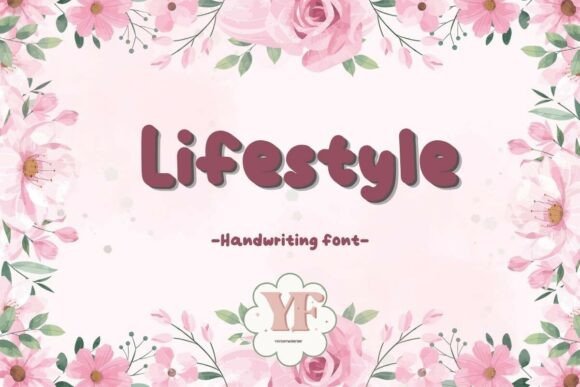
Lifestyle: The Handwritten Font That Brings Authenticity to Digital Expression
In a world saturated with sleek, sterile typography, there's a growing hunger for designs that feel human. We're drawn to textures, imperfections, and the tangible warmth of something made by hand. This shift isn't just aesthetic; it's a response to our increasingly digital lives, a desire to inject personality and authenticity into everything from social media posts to business branding. It's here that the Lifestyle handwritten font finds its purpose, offering a bridge between the efficiency of digital tools and the irreplaceable charm of personal touch.
The Enduring Appeal of Handwriting in a Digital Age
The act of writing by hand carries an inherent sense of intention and care. It’s personal, immediate, and uniquely expressive. While digital communication excels in speed and clarity, it often lacks this nuanced character. The Lifestyle font is designed to capture this very essence. Its smooth, natural strokes and relaxed flow mimic the authentic feel of pen on paper, avoiding the overly scripted or artificial look that can make some handwritten fonts feel contrived. This isn't about replicating imperfection for its own sake, but about embracing the balanced, free-flowing rhythm of genuine handwriting.
This resonates deeply with current trends. In content creation, audiences increasingly favor brands and creators who feel relatable and "real." A perfectly typeset corporate message might convey professionalism, but a quote presented in a warm, handwritten style like Lifestyle can feel like a direct, personal note. For educators and students, it can make digital notes and worksheets feel more approachable and less intimidating, aiding in focus and retention. The font’s versatility is its strength—it’s clean enough for readability in longer text blocks on a digital planner, yet casual enough to feel at home on a social media graphic or a wedding invitation.
Practical Applications: From Digital Planning to Brand Identity
The true value of a font like Lifestyle lies in its practical application across modern workflows. Consider the rise of digital planning and journaling in apps like GoodNotes and Notability. Users are crafting intricate, personalized systems to organize their lives. Using a generic system font can feel cold, while a well-designed handwritten font transforms a digital page into a personal canvas. Lifestyle is particularly suited for this environment, offering the clarity needed for task lists and meeting notes while maintaining the inviting aesthetic of a private journal.
For small business owners and marketers, typography is a critical component of brand voice. A local bakery, a handmade jewelry shop, or a wellness coach might find that the Lifestyle font perfectly encapsulates their brand's ethos of craftsmanship, care, and personal connection. It can be used effectively in:
- Social Media Graphics: Creating quotes, announcements, and stories that feel genuine and engaging.
- Product Packaging and Labels: Adding a personal, artisanal touch to physical goods.
- Email Newsletters: Making digital communication feel less automated and more conversational.
- Website Banners and Calls-to-Action: Softening a digital interface and guiding visitors with a friendly tone.
Even in professional settings, its use can be strategic. A creative agency might use it for internal brainstorming documents to foster a more open atmosphere, or a freelancer could use it in client mood boards to convey a specific creative direction. The key is matching the font's personality to the context—it’s less about replacing all professional typefaces and more about using it as a tool for specific, intentional moments of connection.
Evolution and the Modern Need for Visual Warmth
The evolution of digital typography has been one of increasing precision and uniformity. While this has brought immense benefits in scalability and consistency, it has also created a visual landscape that can feel impersonal. The renewed interest in handwritten and script fonts is a direct counter-movement, a search for warmth and humanity in our interfaces. Lifestyle represents a mature iteration of this trend. It avoids the pitfalls of overly ornate or difficult-to-read script fonts, focusing instead on a balanced, approachable letterform that prioritizes both beauty and function.
This aligns with broader lifestyle shifts towards mindfulness, authenticity, and personal expression. People are curating their digital environments with the same care they apply to their physical spaces. A font choice is a micro-decision that contributes to the overall feel of a document, a presentation, or a brand. Lifestyle serves as a tool for that curation, enabling users to create spaces—whether on a screen or on paper—that feel welcoming, personal, and reflective of their own creative living.
Choosing and Using Lifestyle Effectively
When selecting and implementing the Lifestyle font, a few practical considerations ensure it enhances rather than hinders your project.
- Context is King: Use it where its personality adds value. It’s excellent for headers, pull quotes, invitations, and short-form content. For body text in lengthy reports or dense articles, pair it with a highly readable sans-serif or serif font to maintain legibility.
- Spacing Matters: Handwritten fonts often benefit from slightly increased letter-spacing (tracking) and line-height (leading) to prevent letters from crowding and to improve readability, especially on screens.
- Color and Contrast: To enhance its natural, ink-on-paper feel, consider using it in a dark gray or warm black rather than a stark, pure black. Ensure there is sufficient contrast against its background for accessibility.
- Know Your Audience: While its charm is broad, ensure the tone aligns with your audience's expectations. A legal document might not be the right venue, but a community newsletter or a creative portfolio is a perfect fit.
Ultimately, Lifestyle is more than just a collection of glyphs; it’s a design tool for crafting connection. It acknowledges that in our pursuit of digital efficiency, we haven’t lost our appreciation for the personal, the crafted, and the genuine. By incorporating its balanced, friendly aesthetic into your projects, you’re not just choosing a typeface—you’re making a choice to communicate with a bit more heart, one thoughtful, handwritten-style word at a time. For anyone looking to add a layer of authenticity and creative comfort to their digital or print work, it presents a compelling and versatile solution.