Amithen: The Power of Textured Brush Typography in Modern Design
In the vast digital landscape where pixels are perfect and vectors are mathematically precise, there is a growing hunger for authenticity. We see it in the resurgence of film photography, the popularity of hand-thrown ceramics, and, most notably, in the world of typography. Designers and creators are constantly searching for ways to break the sterile uniformity of standard sans-serifs. This is where Amithen enters the conversation. It is not merely a font; it is a tool for injecting soul into a design. As a textured brush font utilizing a contemporary approach, Amithen bridges the gap between traditional calligraphy and modern digital needs.
Understanding the Anatomy of Amithen
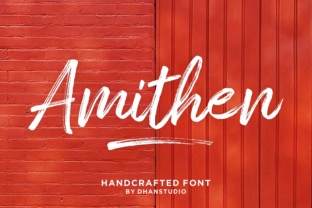
At its core, Amithen is defined by its texture. Unlike standard digital fonts that rely on clean, solid vector paths, Amithen is designed to mimic the physical properties of a brush touching paper. It features an irregular baseline, which is a crucial characteristic. In traditional typography, the baseline is the invisible line upon which letters sit. In Amithen, this line fluctuates naturally. This subtle "wobble" is what gives the font its handmade quality. It tells the viewer’s eye that this was not generated by a machine, but crafted by a human hand.
The "contemporary approach" mentioned in its description is equally important. While vintage brush scripts often feel heavy or overly ornate, Amithen maintains a fresh, relevant aesthetic. It balances the organic irregularities of a marker or paintbrush with the legibility required for modern screens. This makes it a versatile asset for anyone looking to add a personal touch without sacrificing readability.
The Psychology of the "Handmade" Aesthetic
Why does a font like Amithen resonate so deeply with audiences today? The answer lies in trust and connection. In an era of AI-generated content and mass production, consumers are increasingly skeptical of overly polished, corporate visuals. A design that looks too perfect can often feel cold or impersonal.
When a brand uses a textured brush font like Amithen, it signals a different set of values. It suggests creativity, vulnerability, and a human-centric approach. For a coffee shop, it says, "We care about the craft." For a social media influencer, it says, "This is the real me." For a tech startup, it can soften the hard edges of technology, making the brand feel more accessible and friendly. The irregular baseline of Amithen acts as a visual cue for authenticity.
Practical Applications: Where Amithen Shines
One of the most significant strengths of Amithen is its versatility. It is a display font, meaning it is designed to be noticed. It is best used for headlines, logos, and short bursts of expressive text rather than long paragraphs. However, its applications are broad and varied.
1. Branding and Logo Design
For businesses that want to stand out, Amithen offers a distinct voice. It is particularly effective for lifestyle brands, artisanal goods, fashion labels, and creative agencies. Because the font has such a strong personality, it can often serve as the primary logo element without needing complex graphics to support it. The texture within the letters ensures that the logo looks high-resolution and detailed, even when scaled down.
2. Social Media and Content Creation
The digital world moves fast, and capturing attention is difficult. Amithen is perfect for Instagram stories, YouTube thumbnails, and Pinterest pins. Its handwritten nature cuts through the noise of standard web fonts. When used for quotes or calls to action, it draws the eye immediately. The contemporary design ensures that it looks good on both mobile devices and desktop monitors, maintaining its charm across different resolutions.
3. Packaging and Merchandise
Physical products benefit immensely from the tactile feel of brush typography. On a coffee bag, a t-shirt, or a candle box, Amithen translates beautifully. The textured edges of the letters mimic the imperfections of screen printing or embossing, adding a layer of perceived value to the product. It suggests that the item inside is crafted with care.
4. Wedding Invitations and Event Stationery
While many script fonts can look dated, Amithen offers a modern alternative for event stationery. Its irregular baseline gives it a romantic, flowing quality suitable for weddings, but its clean edges keep it from looking messy. It pairs well with minimalist designs, allowing the typography to be the star of the show.
Design Strategies: Pairing and Layout
To use Amithen effectively, one must understand the art of font pairing. Because Amithen is a display font with high visual impact, it needs a partner that can play a supporting role.
- Pairing with Sans-Serifs: The most effective strategy is to pair Amithen with a clean, geometric sans-serif font (like Montserrat or Lato). The simplicity of the sans-serif provides a neutral background that allows the texture of Amithen to pop without overwhelming the viewer.
- Contrast is Key: Avoid pairing Amithen with other decorative or handwritten fonts. This creates visual clutter. The goal is contrast: organic vs. geometric, textured vs. smooth.
- Spacing and Hierarchy: Because of its irregular baseline, Amithen requires careful attention to leading (line spacing). Give the text room to breathe. It works best when it has space around it, allowing the viewer to appreciate the brush strokes.
Evaluating Suitability: Is Amithen Right for Your Project?
While Amithen is a powerful tool, it is not a universal solution for every design challenge. Evaluating its suitability requires an honest assessment of the project's goals and audience.
When to Use Amithen
Amithen is the ideal choice when the primary goal is to evoke emotion, creativity, or warmth. If you are designing for a creative portfolio, a bakery, a yoga studio, or a personal blog, this font aligns perfectly with those vibes. It is also excellent for projects that require a "human touch" to counteract the coldness of digital interfaces.
When to Reconsider
If your project requires strict formality, legal precision, or ultra-modern minimalism (think Swiss design or corporate banking), Amithen might not be the best fit. Its playful and organic nature could clash with a serious, rigid corporate identity. Additionally, because it is a textured font, it can sometimes become difficult to read at very small sizes or in low-resolution print environments. It is a display font, and it demands to be seen, not whispered.
The Technical Edge: Why "Contemporary" Matters
You might wonder why the "contemporary approach" of Amithen is emphasized. Older brush fonts often suffered from poor kerning (the space between letters) and inconsistent x-heights (the height of lowercase letters). This made them difficult to use in professional layouts.
Amithen solves these issues. While it retains the look of a wild, hand-painted script, the underlying engineering is modern. The letters connect smoothly, and the spacing is optimized for current design software. This means designers get the best of both worlds: the charm of the past with the functionality of the present. You don't have to fight the font to make it look good; it flows naturally.
Real-World Scenarios: A Day in the Life of Amithen
Imagine a freelance graphic designer named Sarah. She is working on a branding package for a new artisanal soap company.
- The Logo: Sarah selects Amithen for the main brand name. The textured brush strokes suggest the handmade nature of the soap. She pairs it with a light, airy sans-serif for the tagline "Pure & Natural."
- The Website: On the homepage, Sarah uses Amithen for the hero headline: "Cleanse Your Spirit." The irregular baseline adds movement to the page, making it feel alive and inviting.
- The Packaging: On the soap wrappers, Sarah uses Amithen for the scent names (e.g., Lavender Bliss). The font looks so authentic that customers might almost feel they can smell the lavender just by looking at the typography.
In this scenario, Amithen is not just a font choice; it is a business strategy. It helps the soap company communicate its value proposition (handmade, natural, high quality) instantly, without needing a paragraph of text to explain it.
Conclusion: Embracing Imperfection
In a world striving for digital perfection, Amithen is a celebration of imperfection. Its textured brush strokes and irregular baseline remind us that beauty often lies in the flaws. For creators, business owners, and designers, it offers a way to connect with audiences on a human level.
Whether you are designing a logo for a startup, a thumbnail for a vlog, or an invitation for a celebration, Amithen provides the versatility and charm needed to make your work stand out. It is a contemporary classic that honors the art of handwriting while embracing the needs of modern design. Don't limit yourself to the rigid lines of standard fonts; let Amithen bring your words to life.